



Some links on this site are affiliate links. When they exist, we use them. When they don't, we don't go looking. We only write about tools we've actually used, and our opinions are our own. Any commission is incidental. Our job is to share what we think is useful.
One of the most exciting aspects of generative AI is the creative freedom it offers. You can create whatever you can imagine, whether for storytelling, product promotion, or visual content that would previously have required specialist skills or significant budget.
The frustration comes quickly, though. No single model does everything well. Some excel at hyper-realistic video generation. Others handle image upscaling beautifully. Certain models are brilliant at typography, whilst others produce stunning illustrations but struggle with photorealism. You find yourself needing to chain models together, playing to each one's strengths.
The commercial reality compounds this. Each platform wants a subscription. Before long, you're carrying five or six recurring costs like virtual luggage for models you might only use intermittently, paying for idle capacity between projects - not that smart commercially.
Fal.ai addresses this by consolidating access to over 600 generative media models through a single marketplace. You test, iterate, and deploy on a pay-per-use basis, accessing what you need when you need it, without the subscription overhead.
Finding the Right Model for Each Task
The real value lies in recognising that different models genuinely excel at different things.
FLUX.1 might be ideal for certain image generation workflows, whilst Google's Veo handles video differently. Stable Diffusion 3.5 approaches typography-heavy content in ways its predecessors didn't. Without somewhere to test these systematically, you're either committing blind to subscriptions or cobbling together free tiers and trials across multiple platforms, which is a pain in the neck, not to mention a monumental waste of time.
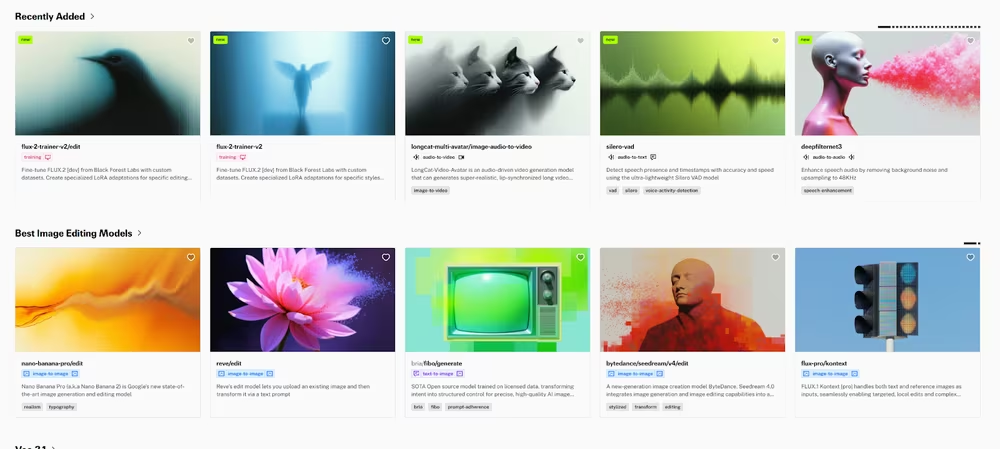
Fal.ai's playground lets you experiment and compare outputs before committing resources. More importantly, the transparent per-run pricing lets you calculate actual costs against your requirements, building a clear picture of the cost-per-asset before deciding whether a model warrants direct API integration for high-volume work.
From Experimentation to Production
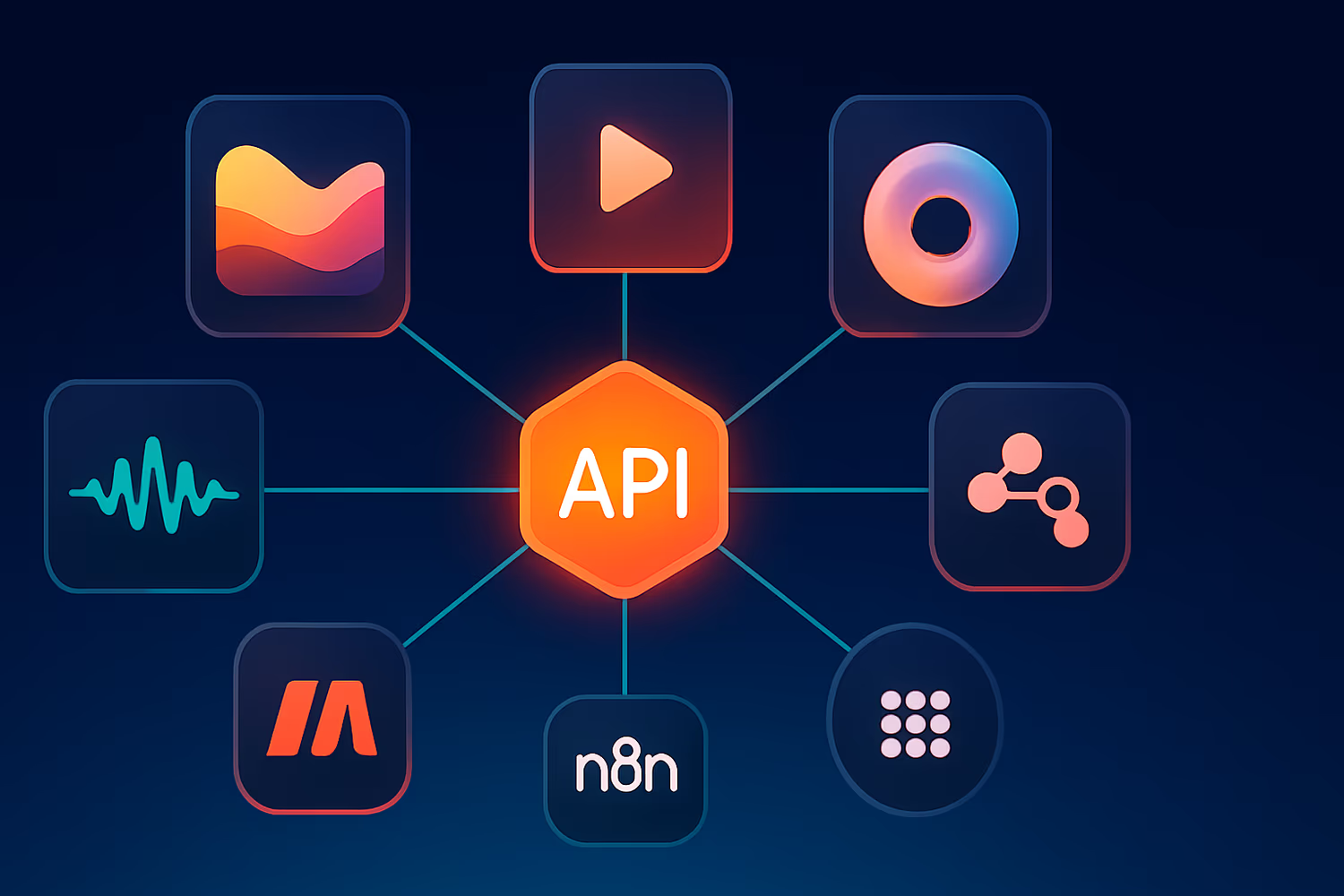
What differentiates Fal.ai from a simple model directory is its API-first architecture. Once you've identified the right model combination through playground testing, you can integrate directly with automation tools like Make.com or n8n. Better still, you can call workflows you have built on Fal.ai
This enables practical workflows: trigger image generation from form submissions, chain multiple models in sequence, batch process assets based on conditional logic. The unified API means switching models requires only changing an endpoint parameter, without needing to restructure your entire automation when a better model emerges, or your requirements shift.
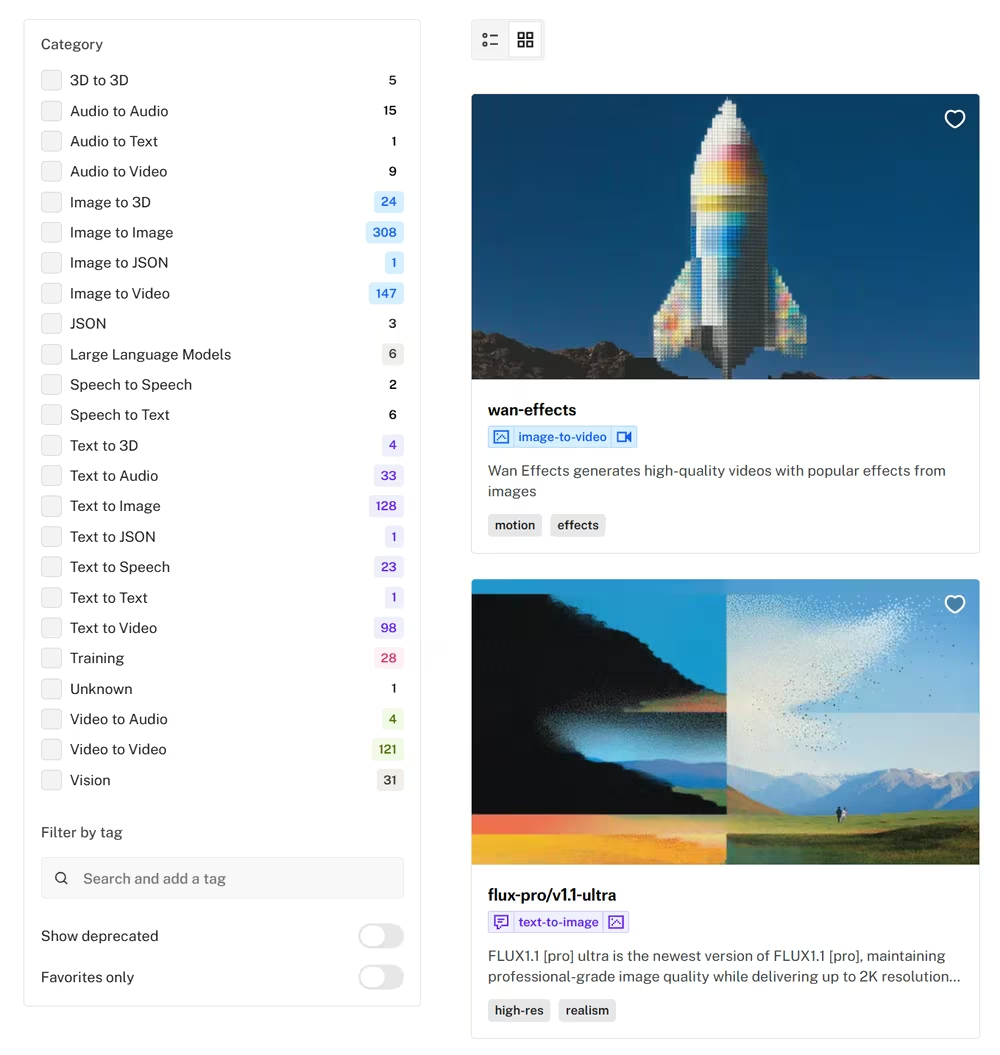
The infrastructure handles over 50 million daily requests, making it viable for production workflows rather than just prototyping. You can also build workflow templates directly within Fal and call them via API from your automation platforms, keeping your recipes centralised.
When to Go Direct
A word of caution. Fal.ai charges a markup on inference costs, and cutting-edge model versions may not appear immediately upon release. If you find yourself consistently relying on the same model with high-volume, predictable usage, direct integration with first-party APIs often provides better rates and additional features.
The platform is most valuable when you need flexibility across multiple models, variable-demand workflows, or when you're still identifying the optimal combination for your output requirements. Once you've validated that a specific model genuinely fits your needs, graduating to direct API access makes commercial sense.
Use Cases
Avoiding subscription sprawl across generative media tools. Rather than maintaining separate monthly subscriptions to FLUX, Stable Diffusion, video generation platforms, and upscaling services (many of which sit idle between active projects), Fal.ai consolidates access to specialist models on a pay-per-use basis. Teams experiment freely, pay only for what they run, and identify which models deliver enough value to warrant direct API integration.
Automating visual asset production without idle capacity costs. Marketing and content teams often face concentrated demand: promotional imagery before launches, social assets during campaigns, and video edits afterwards. By connecting Fal.ai to Make.com or n8n, you can trigger image generation, upscaling, and content creation automatically from submissions or content calendars, paying only during active production periods.

Testing specialist models against actual requirements. Not all image generation models perform equally well. Some produce hyper-realistic output, others handle typography beautifully, and certain models upscale legacy photography effectively.
Building conditional routing for intelligent content workflows. Automated pipelines can route different content types to optimal models: headshots to portrait-trained models, product renders to hyper-realistic generators, abstract concepts to illustration-focused tools. The unified API means switching models requires only changing an endpoint parameter, enabling sophisticated conditional logic without managing multiple integrations.
Scaling creative experimentation without budget commitment. When exploring new content formats (AI-enhanced thumbnails, custom video content, upscaled archival imagery), you need to validate concepts before committing resources. Consumption-based pricing removes the barrier of subscribing to tools you might abandon after testing, making creative exploration commercially viable at the prototype stage.
Practical Considerations
The Playground is your starting point. Test models, compare outputs, and refine your approach before putting anything into production. This is where you build your recipe. Or you can, if appropriate, just work here.
API-first means technical readiness. The playground may be enough for you. However, the platform is designed for those comfortable with API integrations, which is how you can ‘productionise’ your recipes by working with automation platforms. Come prepared with some technical knowledge or plan to work through Make.com or n8n.
Fal Workflows centralise your recipes. Build workflow templates directly in Fal and call them via API from your automation platforms, keeping configuration in one place.
Monitor for graduation opportunities. Track which models you're using heavily. When usage becomes predictable and high-volume, evaluate whether direct first-party API integration offers better economics.